Ottawa, Jan. 19, 2026 (GLOBE NEWSWIRE) -- The global AI in cultured meat market size stood at USD 54.65 million in 2025 and is predicted to grow from USD 69.13 million in 2026 to reach around USD 573.45 million by 2035. A report published by Towards FnB, a sister firm of Precedence Research, highlights that accelerating adoption of artificial intelligence across cell-line development, growth media optimization, and bioprocess automation is playing a critical role in advancing commercial-scale cultivated meat production.
Market expansion is being driven by rising sustainability concerns, ethical considerations related to animal welfare, and growing consumer demand for alternative protein sources. Additionally, the application of AI across cell-line development, growth media optimization, and bioprocess automation is contributing to significant reductions in production costs, further accelerating the adoption of cultured meat technologies globally.
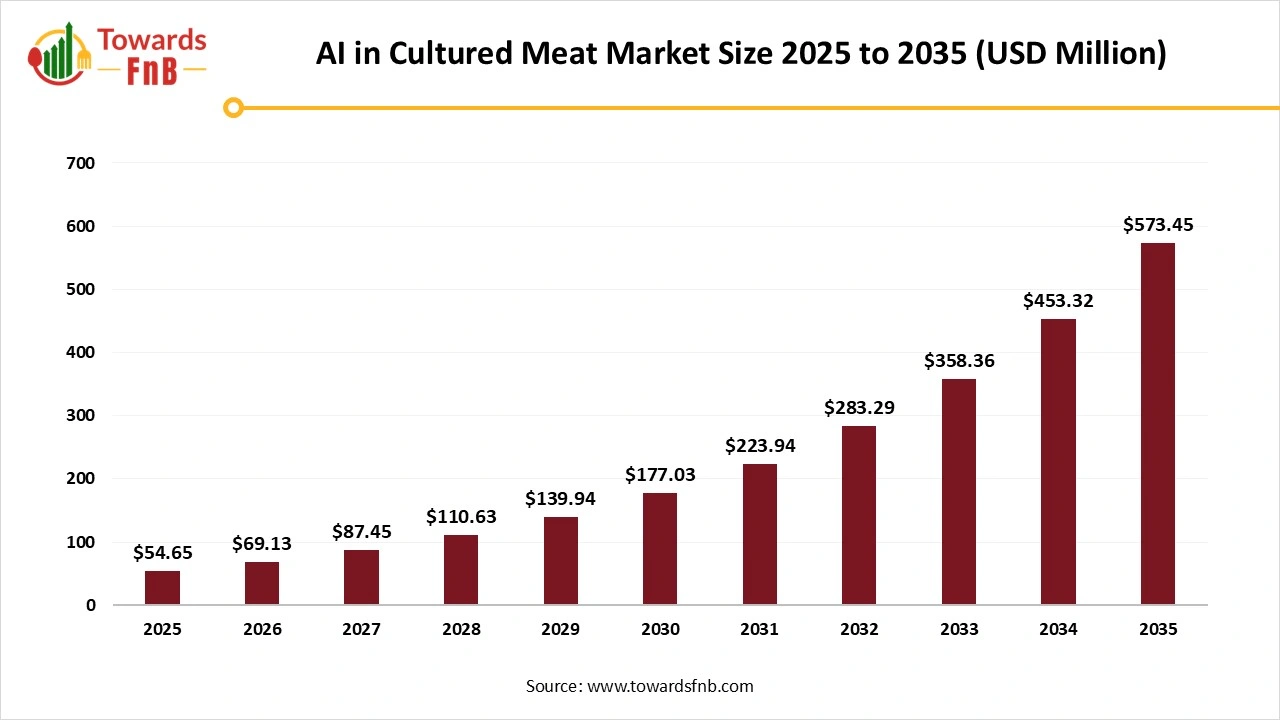
Note: This report is readily available for immediate delivery. We can review it with you in a meeting to ensure data reliability and quality for decision-making.
Access the Full Study Instantly | Download Sample Pages of the Report Now@ https://www.towardsfnb.com/download-sample/5977
Key Highlights of AI in Cultured Meat Market
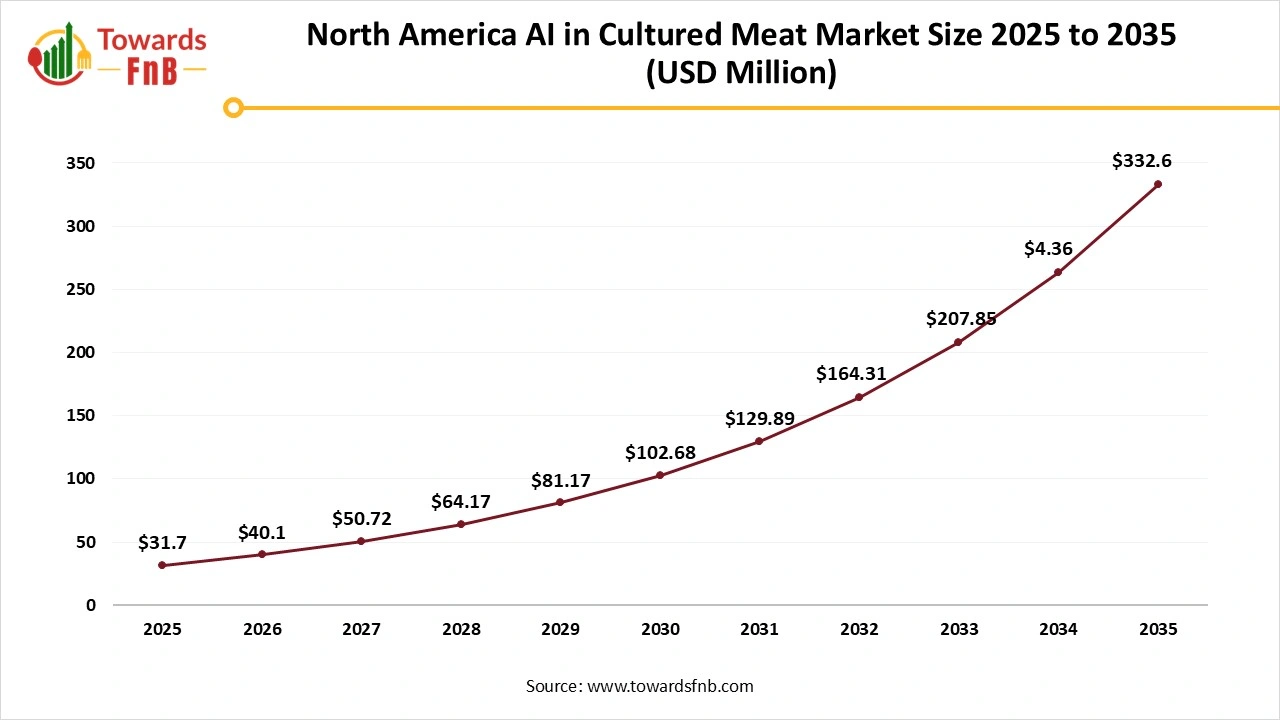
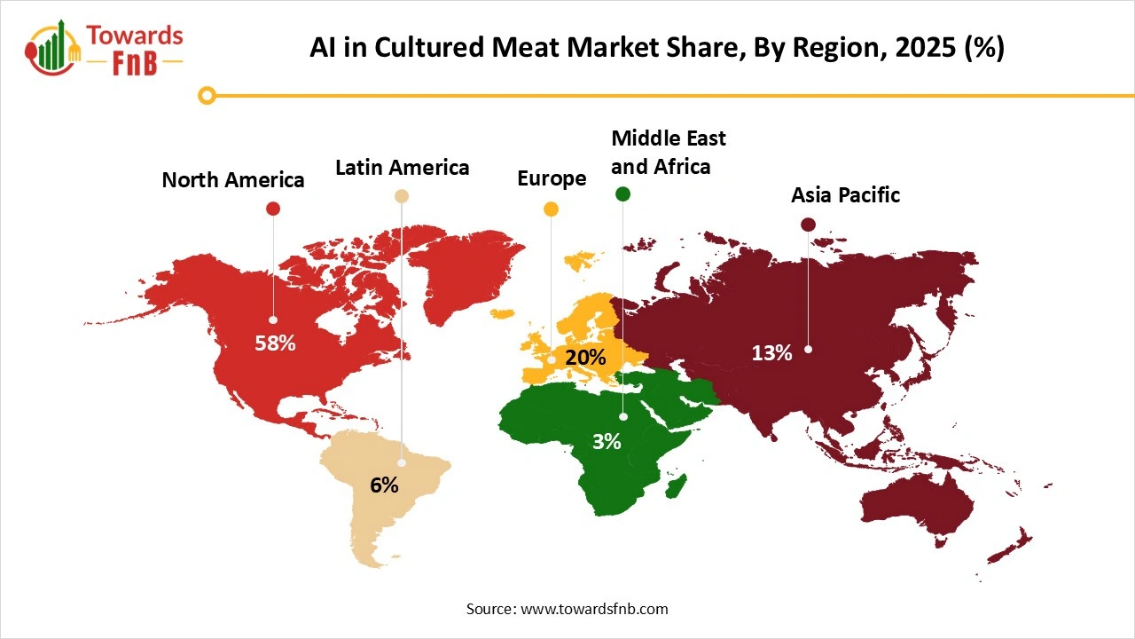
- By region, North America led the AI in cultured meat market with largest share of 58% in 2025, whereas the Asia Pacific is expected to grow in the foreseeable period.
- By application, the culture media formulation segment led the market in 2025, whereas the bioprocess monitoring and control segment is expected to grow in the foreseen period.
- By technology, the machine learning segment led the AI in cultured meat market in 2025, whereas the digital twins segment is expected to grow in the foreseen period.
- By end user, the cultured meat startups segment dominated the AI in cultured meat market in 2025, whereas the food and beverage companies segment is expected to grow in the foreseeable period.
- By meat type, the poultry segment led the AI in cultured meat market in 2025, whereas the seafood segment is expected to grow in the foreseen period.
- By deployment model, the AI-based cloud platforms segment led the market in 2025, whereas the hybrid AI systems segment is expected to grow in the foreseen period.
“AI is fundamentally transforming how cultivated meat moves from lab-scale experimentation to industrial-scale production. Technologies such as machine learning, digital twins, and predictive analytics are addressing the biggest barriers, cost, consistency, and scalability,” said Vidyesh Swar, Principal Consultant at Towards FnB.
Technological Advancements are helpful for the Growth of AI in Cultured Meat Industry
The AI in cultured meat market is observed to grow due to the integration of AI for the formation of lab-grown meat. The market involves the use of AI for the production, optimization, and commercialization of cultivated meat. AI is also helpful for bioprocess optimization, cell line development, media formulation, bioreactor monitoring, and supply chain scaling. The market also focuses on supply chain scaling, enabling cost reduction, and improving product quality, with faster market adoption.
New Trends of AI in Cultured Meat Market
- AI algorithms help to analyze vast datasets to predict optimal nutrient mixes and genetic edits for faster and more efficient cell growth, which is helpful for the growth of the market.
- Combining AI and robotics allows the cultivated meat producers to enable fully automated large-scale bioreactor management, further fueling the growth of the market.
- Computer vision and sensor data driven by AI also help to provide real-time monitoring, further fueling the market’s growth.
Recent Developments in AI in Cultured Meat Market
- In June 2025, Gourmet, the Parisian firm producing foie gras by cultivating duck cells in bioreactors, partnered with DeepLife, an AI-led cellular digital twin tech company, to develop the world’s first avian digital twin.
- In May 2025, Multus Biotechnology, a producer of growth media solutions for the cultivated meat sector, announced the launch of its new food-grade basal media, named DMEM/F12-FG.
View Full Market Intelligence@ https://www.towardsfnb.com/insights/ai-in-cultured-meat-market
Product Survey of the AI in Cultured Meat Market
| Product Category | Description or Function | Common Forms or Variants | Key Applications or User Segments | Representative Brands or Product Types |
| AI-Driven Cell Line Optimization Software | Uses machine learning to select, optimize, and stabilize animal cell lines for scalable growth | Predictive cell selection models, growth optimization platforms | Cultured meat producers, cellular agriculture startups | AI-based cell optimization platforms |
| Bioprocess Control AI Systems | Real-time AI systems that monitor and adjust bioreactor parameters | Adaptive process control software, digital twins | Cultured meat manufacturing facilities | AI-enabled bioreactor control systems |
| AI-Based Media Optimization Tools | Algorithms that optimize growth media composition to reduce cost and improve yield | Media formulation models, ingredient substitution engines | Cultured meat R&D teams | AI media optimization software |
| Computer Vision for Cell Monitoring | Image-based AI tools for monitoring cell morphology and density | Microscopy image analysis platforms | Cultured meat research labs | AI-powered cell imaging systems |
| AI-Assisted Scaffold Design Software | AI models that design edible scaffolds for tissue structuring | Generative scaffold design tools | Cultured meat tissue engineering teams | AI scaffold design platforms |
| Predictive Quality Control Systems | AI tools that predict contamination, yield loss, or batch failure | Anomaly detection software | Cultured meat production plants | Predictive QC AI systems |
| AI-Enabled Scale-Up Simulation Tools | Simulation models that predict outcomes during production scale-up | Virtual scale-up platforms | Cultured meat scale-up and engineering teams | Digital scale-up simulation tools |
| Supply Chain Optimization AI | AI systems optimizing sourcing, logistics, and inventory for cultured meat inputs | Demand forecasting and inventory AI tools | Cultured meat manufacturers | AI-driven supply chain platforms |
| AI-Based Cost Modeling Software | Tools that model cost drivers and production economics | Cost-reduction modeling engines | Cultured meat business strategy teams | AI cost analysis platforms |
| AI-Integrated R&D Platforms | Unified AI environments integrating biology, engineering, and data analysis | End-to-end AI R&D suites | Cultured meat startups and research institutions | Integrated AI R&D systems |
For Detailed Pricing and Tailored Market Report Options, Click Here: https://www.towardsfnb.com/checkout/5977
AI in Cultured Meat Market Dynamics
What are the Growth Drivers of AI in Cultured Meat Market?
Higher demand for sustainable meat alternatives, especially by health conscious consumers, is one of the major factors for the growth of the market. Growing environmental concerns leading to higher demand for sustainable alternatives also help to fuel the growth of the market. AI and other technologically advanced techniques also help to reduce production costs and aid waste reduction, further fueling the growth of the market. Improved texture, quality, and consistency of the lab-grown meat with the help of AI is another major factor for the growth of the market.
Challenge
Technical Issues Hampering the Growth of the Market
The AI in cultured meat market faces technical challenges, such as media optimization, scaffold development, bioreactor scale-up, and cell-line stability. Hence, it further hampers procedures such as rapid data analysis, predictive modeling, and automation to streamline processes. Hence, such factors altogether may slow the growth of the market.
Opportunity
Enhanced R&D and formulation are helpful for the Growth of AI in Cultured Meat Market
Technological advancements in the form of AI and ML have made a major contribution in fueling the growth of the market and supporting R&D. AI helps to design cheaper, effective serum-free media by predicting nutrient needs and cell responses. Such factors also help to reduce reliance on expensive growth factors. ML also accelerates the selection and improvement of cell lines for better growth and yields.
AI in Cultured Meat Market Regional Analysis
North America led the AI in Cultured Meat Market in 2025
North America led the AI in cultured meat market in 2025, due to higher research and development, and higher demand for meat alternatives by consumers in the region. Advanced technology, along with the supportive nature of public and private sectors, helps to speed the process, further fueling the growth of the market. AI and ML algorithms help to examine the datasets deeply to pinpoint and create the best data cell lines for production at a commercial scale. It significantly helps to lower the time and resources required for the procedure. The US has a major role in the growth of the market as AI helps to overcome any form of scientific or commercial issues in the processing of lab-grown meat.
Asia Pacific is observed to be the Fastest-Growing Region in the foreseeable period
Asia Pacific is observed to be the fastest-growing region in the forecast period due to factors such as growing disposable income, higher demand for protein-rich options, and higher demand for sustainable meat alternatives. Cultured meat helps to satisfy this growing consumer need sustainably, lowering the requirement of conventional animal agriculture. AI helps to manage the cost and scalability factors observed in the manufacturing of lab-grown meat, further fueling the growth of AI in cultured meat market in the foreseeable period. The market also observes growth in the region as it has become a center for technological innovations, especially in AI and biotechnology. India has a major contribution in the growth of the market due to the higher demand for alternatives protein and technologically-driven startups in the domain.
Europe is observed to have a Notable Growth in the Foreseen Period
Europe is observed to have a notable growth in the foreseen period due to the perfect amalgamation of AI with complex regulatory challenges. The region is also a hub of cellular agriculture innovation, with companies and research institutions developing technologies for cell lines, scaffolds, and bioprocessing that could benefit from AI-driven optimization and automation. Germany has a major contribution to the growth of the market as AI in the region helps to enhance production efficiency, focusing on lowering the production cost and eliminating waste.
Trade Analysis for the AI in Cultured Meat Market
What Is Actually Traded (Product Forms and HS Proxies)
- Industrial automation hardware used to support AI-enabled cultured meat bioprocessing, such as sensors, actuators, and controllers, is commonly traded under HS 8479 (machines and mechanical appliances, parts).
- Laboratory bioreactors and bioprocess equipment that integrate AI control systems for cell culture, monitoring, and optimization are typically classified under HS 8419 (machinery, plant or laboratory equipment).
- Computing and AI inference hardware used for data processing, machine learning training, and real-time process control in cultured meat facilities is generally traded under HS 8471 (computers and peripheral equipment).
- Software licenses and cloud-based AI platforms for analytics, predictive modeling, and process optimization are digitally delivered and often linked to licensing agreements rather than HS customs codes, but where physical media is shipped they may be declared under HS 8523 (discs and media).
- Integrated cultured meat production systems combining bioreactor hardware, sensors, and AI control modules are frequently supplied as capital equipment and declared under aggregated machinery headings such as HS 8479 and HS 8419.
Top Exporters (Supply Hubs)
- United States: Major exporter of AI software, machine-learning platforms, and bioprocess automation systems supporting cultured meat production, driven by strong innovation ecosystems and cloud service leadership.
- Germany: Exporter of industrial automation hardware, sensors, and integrated process control systems used in AI-enabled cultured meat facilities, backed by advanced engineering and manufacturing clusters.
- Japan: Supplier of precise control systems, robotics components, and sensor technologies that underpin AI-assisted bioprocessing in the cultured meat value chain.
- China: Exporter of computing hardware, integrated sensor arrays, and cost-competitive automation equipment used in AI-driven cultured meat facilities.
Top Importers (Demand Centres)
- United States: Significant importer of specialized sensors, AI platforms, and bioprocess hardware that are integrated into cultured meat production facilities.
- European Union: Strong intra-EU and extra-EU imports of AI hardware and bioprocess systems supporting cultured meat R&D and pilot production.
- South Korea: Growing importer of AI analytics platforms and bioreactor automation systems linked to national cultured meat technology development initiatives.
- Singapore: Imports advanced AI integration platforms and precision bioprocess hardware to support cultured meat scale-up and regulatory compliance in Asia.
Typical Trade Flows and Logistics Patterns
- Industrial automation hardware, computing systems, and sensors are shipped via containerized sea freight or air freight depending on urgency and value.
- High-value AI hardware and computing equipment are often shipped by air to minimize lead times for installation in cultured meat facilities.
- Software platforms are delivered digitally but may involve on-site integration services and physical support hardware.
- Regional systems integrators handle final configuration, calibration, and compliance testing before deployment.
Trade Drivers and Structural Factors
- Advancement of cultured meat technologies increases demand for high-precision AI control and automation hardware.
- R&D intensification in predictive modeling, process optimization, and quality assurance drives cross-border trade in specialized AI platforms.
- Cost-effective scaling of bioprocess facilities depends on imported high-performance computing and sensor systems.
- Standardization of data interoperability across manufacturing facilities promotes sourcing from established technology hubs.
- Pilot plants and demo facilities in emerging markets import turnkey systems to accelerate local cultured meat development.
Regulatory, Quality, and Market-Access Considerations
- Food safety and process control regulations influence acceptance of AI-based bioprocess monitoring systems.
- Certification for industrial automation and electrical equipment is required prior to import in many jurisdictions.
- Data privacy, cross-border data flows, and software compliance frameworks affect how AI platforms are deployed and traded.
- Documentation covering safety, performance validation, and integration specifications is typically required for customs clearance.
Government Initiatives and Public-Policy Influences
- National innovation and advanced manufacturing strategies incentivize the adoption of AI and automation in cultured meat R&D and production.
- Funding programs for biotechnology and food technology infrastructure indirectly stimulate demand for AI-enabled systems.
- Trade agreements and technology standards harmonization affect tariffs and market access for computing and automation hardware.
AI in Cultured Meat Market Report Scope
| Report Attribute | Key Statistics |
| Base Year | 2025 |
| Forecast Period | 2026 to 2035 |
| Growth Rate from 2026 to 2035 | CAGR of 26.5% |
| Market Size in 2026 | USD 69.13 Million |
| Market Size in 2027 | USD 87.45 Million |
| Market Size in 2030 | USD 177.03 Million |
| Market Size by 2035 | USD 573.45 Million |
| Dominated Region | North America |
| Fastest Growing Region | Asia Pacific |
| Regions Covered | North America, Europe, Asia-Pacific, Latin America and Middle East & Africa |
Have Questions? Let’s Talk—Schedule a Meeting with Our Insights Team: https://www.towardsfnb.com/schedule-meeting
AI in Cultured Meat Market Segmental Analysis
Application Analysis
The culture media formulation segment led the AI in cultured meat market in 2025, as the segment manages one of the major issues in the formation of AI cultured meat, the expenses required in the cell growth media. AI plays a major role in the growth of the market as it manages issues that are intricate and multi-dimensional, of developing cost-effective, animal-free, and efficient options at an industrial level. Predictive analytics with the help of AI can help to reduce the time required for research and development of new and sustainable formulations, further fueling the growth of the market. Machine learning models study the extensive datasets from previous experiments to study the ideal mix of nutrients and growth factors for particular cell lines.
The bioprocess monitoring and control segment is observed to be the fastest-growing segment in the foreseen period as it helps to increase production, maintain consistent quality, and enhance efficiency, fueling the growth of the market. AI helps to manage the complex cellular growth in the AI in cultured meat, which is helpful for the growth of AI in cultured meat market. AI sensors and automation allow immediate modifications required for essential bioprocess parameters helpful for cell growth, nutrient supply, and aid waste management, which helps in economic management of large-scale AI meat production.
Technology Analysis
The machine learning segment dominated the AI in cultured meat market in 2025, as it helps to address the core biological and engineering issues observed due to extensive and economical manufacturing. ML helps to study the intricate datasets and suggest the best cell lines, and create specific and animal-free growth media. It helps in effective cost management and also helps to eliminate the variable animal-sourced serum. The segment also focuses on speeding up the creation of effective and sustainable formulations. Various forms of ML, such as computer vision, are useful for automated quality assessment by examining the images of food items.
The digital twins segment is expected to grow in the forecast period, as the segment helps to focus on replicating the impact of various nutrients and growth factors to identify the best cost-effective cell culture media combinations. The segment also helps businesses to stimulate and optimize factors such as temperature, pH, and oxygen concentrations to enhance cell production and lower resource consumption. Simulation of the complete bioprocess, from sourcing cells to harvesting, the segment studies the whole procedure and eliminates issues to improve production efficiency, along with eliminating waste.
End User Analysis
The cultured meat startups segment dominated the AI in cultured meat market in 2025, as the segment focuses on flexibility, capacity to promote innovation, and emphasis on advancing core technologies, which help to utilize AI for improved efficiency. AI also helps in advancing the cultured meat sector by improving production, effectiveness, quality, and scalability. AL and ML are two crucial elements for the growth of the market as they help to enhance the growth media, simplify bioprocesses, elevate quality control, identify contamination, and lower manufacturing costs. All the factors are essential to ensure the lab-grown meat is a practical and sustainable substitute for conventional meat.
The food and beverage companies segment is expected to grow in the foreseeable period due to rising demand for sustainable, nutritious, and ethical food options. AI also helps in the broad commercialization of cultured meat, which is helpful for the growth of the market in the foreseeable period. AI helps in regulating the makeup and framework of lab-grown meat by accurately blending the required ingredients and enhancing cell development. Hence, altogether, the factors help to fuel the growth of the market in the foreseeable period.
Meat Type Analysis
The poultry segment led the AI in cultured meat market in 2025, due to high demand for meat options like chicken by consumers of different age groups. Its less complex cellular structure aids efficient growth in laboratory environments, further fueling the growth of the market. Higher demand for chicken meat at household as well as commercial levels leads to higher demand for novel cultivated substitutes to satisfy the growing demand. Poultry meat is also a cost-effective option, which further aids the growth of the AI in cultured meat industry. An increasing number of startups and well-established businesses investing in cellular agriculture technology also helps to fuel market’s growth.
The seafood segment is expected to grow in the foreseeable period due to its exceptional capability to mimic the intricate environment required for the cultivation and growth of marine organisms. Compared to cultured beef or chicken meat, the marine species require a specific and meticulously regulated environment for their growth. Fish cells exhibit superior resilience and stability, which are helpful in managing changes in oxygen and pH levels more effectively than mammalian cells.
Deployment Model Analysis
The cloud-based AI platforms segment dominated the AI in cultured meat market in 2025, due to its cost-effectiveness, scalability, and flexibility, which are helpful for fast-evolving production technologies. The segment also helps startups to develop digital twins of biological systems to conduct virtual experiments and enhance processes, eliminating the costs and time required for traditional laboratory work. Such platforms help to provide reliable and robust AI technologies to small and medium-sized enterprises, which are helpful for the growth of the market. The segment also aids startups with financial help for expensive upfront investments in on-premises infrastructure.
The hybrid AI systems segment is expected to grow in the foreseen period as the segment focuses on combining various technologies to develop a smart factory capable of controlling all production phases with little human involvement. Hybrid AI also helps in accurate bio-printing and scaffolding to mimic the texture of traditional meat, tackling a crucial obstacle for consumer acceptance. The segment also integrates various AI technologies, offering more efficient solutions for such intricate issues, fueling the growth of the market in the foreseeable period.
Feel Free to Get in Touch with Us for Orders or Any Questions at: sales@towardsfnb.com
Additional Topics Worth Exploring:
- Tea Market: The global tea market size is projected to expand from USD 30.25 billion in 2025 to USD 54.68 billion by 2034, growing at a CAGR of 6.8% during the forecast period from 2025 to 2034.
- Gluten Free Food Market: The global gluten free food market size is increasing from USD 15.71 billion in 2026 and is expected to surpass USD 37.04 billion by 2035, with a projected CAGR of 10% during the forecast period from 2026 to 2035.
- Organic Food Market: The global organic food market size is expected to grow from USD 253.96 billion in 2025 to USD 660.25 billion by 2034, with a compound annual growth rate (CAGR) of 11.20% during the forecast period from 2025 to 2034.
- Canned Food Market: The global canned food market size is projected to expand from USD 144.43 billion in 2026 to reach around USD 218.37 billion by 2035, growing at a CAGR of 4.7% during the forecast period from 2026 to 2035.
- Dietary Supplements Market: The global dietary supplements market size is projected to reach USD 507.33 billion by 2035, growing from USD 229.77 billion in 2026, at a CAGR of 9.2% from 2026 to 2035.
- Canned Wines Market: The global canned wines market size is expected to increase from USD 142.20 million in 2026 to reach around USD 369.70 million by 2035, growing at a CAGR of 11.2% throughout the forecast period from 2026 to 2035.
- Plant-based Protein Market: The global plant-based protein market size is forecasted to expand from USD 22.10 billion in 2026 and is expected to reach USD 46.82 billion by 2035, growing at a CAGR of 8.7% during the forecast period from 2026 to 2035.
- Frozen Food Market: The global frozen food market size is expected to grow from USD 473.40 billion in 2026 to reach around USD 721.91 billion by 2035, at a CAGR of 4.8% over the forecast period from 2025 to 2034.
- Beverage Packaging Market: The global beverage packaging market size is projected to reach USD 285.66 billion by 2035, growing from USD 182.57 billion in 2026, at a CAGR of 5.1% during the forecast period from 2026 to 2035.
- Vegan Food Market: The global vegan food market size is evaluated at USD 24.77 billion in 2026 and is expected to reach USD 61.85 billion by 2034, with a CAGR of 10.7% during the forecast period from 2025 to 2034.
- Food Additives Market: The global food additives market size is rising from USD 128.14 billion in 2025 to USD 214.66 billion by 2034. This projected expansion reflects a CAGR of 5.9% throughout the forecast period from 2025 to 2034.
- Coconut Products Market: The global coconut products market size is expected to climb from USD 14.18 billion in 2025 to approximately USD 33.71 billion by 2034, growing at a CAGR of 10.1% during the forecast from 2025 to 2034.
Company Profiles and Strategic Positioning in the AI in Cultured Meat Market
- Eat Just (GOOD Meat): GOOD Meat, the cultivated meat division of Eat Just, is among the first companies globally to secure regulatory approval for selling cultivated meat, positioning it as a commercialization pioneer. Its strategic impact lies in demonstrating how AI-enabled bioprocess optimization and quality control can support regulatory compliance, improve production consistency, and accelerate market entry, thereby setting industry benchmarks for large-scale adoption.
- Believer Meats: Believer Meats focuses on high-efficiency, industrial-scale cultivated meat production with a strong emphasis on cost reduction. By integrating AI across cell-line development, media optimization, and continuous production systems, the company plays a critical role in pushing the industry toward cost parity with conventional meat, reinforcing AI’s importance as a driver of commercial viability.
- BlueNalu: BlueNalu specializes in cultivated seafood, targeting premium fish species affected by overfishing and supply-chain instability. The company’s strategic impact comes from its use of AI-driven monitoring and simulation tools to manage complex marine cell growth, expanding AI adoption into high-value seafood applications and strengthening sustainability-driven market positioning.
- Shiok Meats: Shiok Meats is a Singapore-based cultivated seafood company focused on shrimp and crustaceans, supported by the region’s strong food-tech ecosystem. Its strategic importance lies in applying AI-assisted bioprocess control to scale delicate crustacean cell cultures, reinforcing Asia Pacific’s role as a fast-growing hub for AI-driven cultured meat innovation.
- SuperMeat: SuperMeat develops cultivated chicken products with an emphasis on transparency, pilot-scale production, and consumer engagement. The company leverages AI for real-time bioprocess monitoring, contamination detection, and quality assurance, positioning itself as a key contributor to building regulatory trust and consumer confidence in AI-enabled cultivated meat systems.
- Mission Barns: Mission Barns focuses on cultivated animal fat, which is blended with plant-based proteins to improve flavor and texture. Its strategic impact lies in using AI to model lipid cell growth and optimize fat composition, addressing one of the cultured meat industry’s most critical challenges—sensory realism—and expanding AI use beyond muscle tissue production.
- Meatable: Meatable specializes in cultivated pork and beef, leveraging advanced cell biology and rapid differentiation techniques. By applying AI and machine learning to accelerate cell development and predict optimal growth conditions, the company shortens commercialization timelines and positions AI as a key enabler of faster market readiness.
- CellX: CellX is a leading cultivated meat company in China, focusing on scalable production aligned with national food security objectives. Its strategic role is defined by integrating AI for cost modeling, supply-chain optimization, and production scale-up, supporting the development of AI-driven mass production frameworks in the Asia-Pacific region.
- Integriculture Inc.: Integriculture operates as a platform-oriented cultivated meat company, offering modular cultivation technologies to other producers. By embedding AI into its cultivation platforms, the company lowers entry barriers for new market participants and positions AI as a foundational infrastructure layer that accelerates ecosystem-wide growth.
Segments Covered in the Report
By Application
- Cell Line Development & Optimization
- Culture Media Formulation
- Bioprocess Monitoring & Control
- Quality Assurance & Safety Testing
- Product Design & Texture Simulation
- Supply Chain & Commercialization
By Technology
- Machine Learning (ML)
- Deep Learning (DL)
- Computer Vision
- Natural Language Processing (NLP)
- Predictive Analytics & Simulation Models
- Digital Twins
By End-User
- Cultured Meat Startups
- Food & Beverage Companies
- Biotechnology & Life Science Firms
- Academic & Research Institutes
- Government & Regulatory Bodies
By Meat Type
- Poultry (Chicken, Duck, etc.)
- Beef
- Pork
- Seafood
- Other Meats (Exotic, Hybrid, etc.)
By Deployment Model
- On-Premises AI Solutions
- Cloud-Based AI Platforms
- Hybrid AI Systems
By Region
North America
- U.S.
- Canada
Asia Pacific
- China
- Japan
- India
- South Korea
- Thailand
Europe
- Germany
- UK
- France
- Italy
- Spain
- Sweden
- Denmark
- Norway
Latin America
- Brazil
- Mexico
- Argentina
Middle East and Africa (MEA)
- South Africa
- UAE
- Saudi Arabia
- Kuwait
Thank you for exploring our insights. For more targeted information, customized chapter-wise sections and region-specific editions such as North America, Europe, or Asia Pacific—are also available upon request.
For Detailed Pricing and Tailored Market Report Options, Click Here: https://www.towardsfnb.com/checkout/5977
Feel Free to Get in Touch with Us for Orders or Any Questions at: sales@towardsfnb.com
Unlock expert insights, custom research, and premium support with the Towards FnB Annual Membership. For USD 495/month (billed annually), get full access to exclusive F&B market data and personalized guidance. It’s your strategic edge in the food and beverage industry: https://www.towardsfnb.com/get-an-annual-membership
About Us
Towards FnB is a global consulting firm specializing in the food and beverage industry, providing innovative solutions and expert guidance to elevate businesses. With an in-depth understanding of the dynamic F&B sector, we deliver customized market analysis and strategic insights. Our team of seasoned professionals is committed to empowering clients with the knowledge needed to make informed decisions, ensuring they stay ahead of market trends. Partner with us as we redefine success in the rapidly evolving food and beverage landscape, and together, we’ll navigate this transformative journey.
Web: https://www.towardsfnb.com/
Our Trusted Data Partners
Precedence Research | Statifacts | Towards Packaging | Towards Chemical and Materials| Nova One Advisor | Food Beverage Strategies | FnB Market Pulse | Nutraceuticals Func Foods | Onco Quant | Sustainability Quant | Specialty Chemicals Analytics
For Latest Update Follow Us:
Discover More Market Trends and Insights from Towards FnB:
➡️Beverage Flavors Market: https://www.towardsfnb.com/insights/beverage-flavors-market
➡️Salt Market: https://www.towardsfnb.com/insights/salt-market
➡️Probiotic Food Market: https://www.towardsfnb.com/insights/probiotic-food-market
➡️Protein Bar Market: https://www.towardsfnb.com/insights/protein-bar-market
➡️Gluten-Free Bakery Market: https://www.towardsfnb.com/insights/gluten-free-bakery-market
➡️Europe Nutraceuticals Market: https://www.towardsfnb.com/insights/europe-nutraceuticals-market
➡️Canned Food Market: https://www.towardsfnb.com/insights/canned-food-market
➡️Non-Alcoholic Beverages Market: https://www.towardsfnb.com/insights/non-alcoholic-beverages-market
➡️Dry Fruit Market: https://www.towardsfnb.com/insights/dry-fruit-market
➡️Frozen Meat Market: https://www.towardsfnb.com/insights/frozen-meat-market
➡️Fish Oil Market: https://www.towardsfnb.com/insights/fish-oil-market
➡️Soft Drink Concentrates Market: https://www.towardsfnb.com/insights/soft-drink-concentrates-market
➡️Meal Kits Market: https://www.towardsfnb.com/insights/meal-kits-market
➡️Ethnic Food Market: https://www.towardsfnb.com/insights/ethnic-food-market